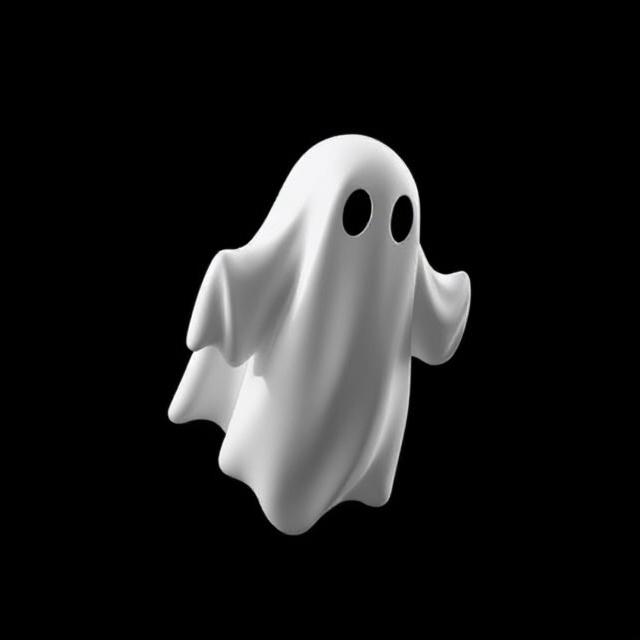
'The bedsheet ghost man is a Halloween costume model. Like many images common to modern culture, the Bed Sheet Ghost began as a theatrical convention that has long lost its context. In Shakespeare's day, it was common to portray ghosts in armor on stage (for example, Hamlet's father is often depicted in a full suit of armor in historical depictions.) In Elizabethan England, armor was no longer worn in combat, and the costuming convention at the time was to dress characters in contemporary (Renaissance) clothing. So, by dressing a character in armor, the character was given an out of date look, and recognized as a ghost. However, as special effects became more elaborate, it became common to lower the actor playing the ghost onto stage with a pulley. Of course, the heavy armor clanked loudly, and by the 19th century, the sight of an armored ghost on stage was more likely to bring laughter than fear. Because of this, by the 1800s, theatres realized they had to create a new, recognizable look for ghost characters, one that would allow the actor to enter and leave silently. Perhaps inspired by traditional burial shrouds or depictions of ghosts as ethereal, misty creatures (both attributes predating the Bed Sheet Ghost), actors began to appear draped in white cloth to portray ghosts.'







Comments
Complete BS, this is a **** *** member!!
2Wrong place for this.
1get those blackies
1not sigma
0this is hillarious but dont get suprised if vrchats soft underbelly gets upset with u like u/mrbaracu
0Its Called Hentai And Its Art
0smh
0Perfect for Halloween LMAAO
0"bed sheet ghost" im ******* dieing
0PFFF *** this is great xD
0Why does the model stand so weird when not moving
0Lolz. If those sheets are anything like the content creator, then they're full of sh*t.
0i can't understand you, go back to your country, ***********
0love how you took time to make full background history of it ahhaha im done
0Ghost? This is a freakin' *** avatar. Remove pls
0@osiris32 Just don't look at it. Simple.
0thnx for this upload :) waited so long for this XD
02spoopy4me
0This avatar is offense i would like it removed. It's bad
0